
Plan a wardrobe from the inside out
Use the clothes you own to decide how much hanging, shelf and drawer space to order.
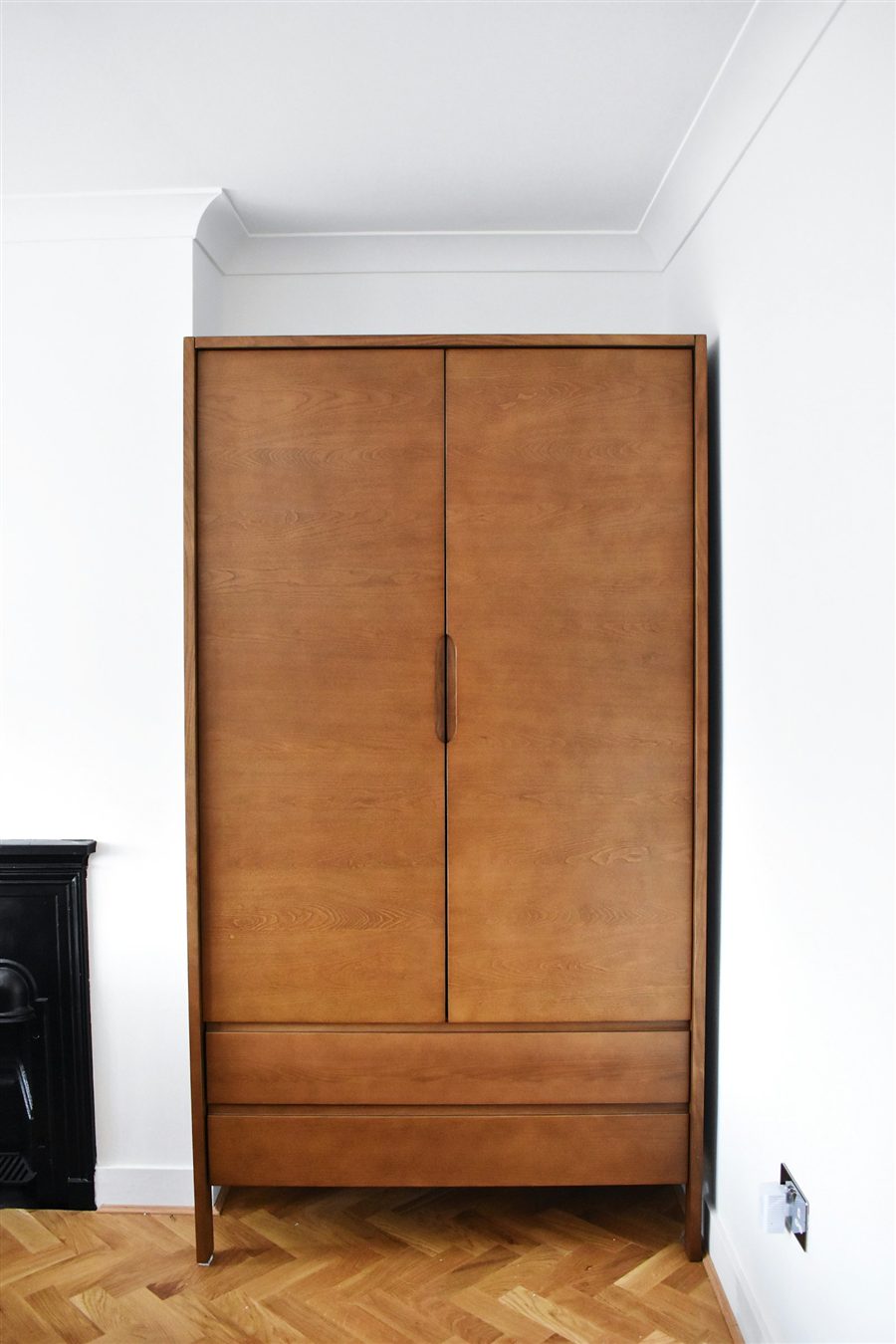
Before picking a shutter finish, empty one section of your current wardrobe onto the bed. Which things live there because they fit, and which things do you actually reach for every morning? The answer gives a designer a better starting point than a photograph of someone else’s cupboard.
Measure a hanger with a garment on it
Hang your bulkiest jacket on its usual hanger and measure its full depth. Measure your longest sari cover, dress or coat from the hook to the hem. Write both numbers on your drawing. Ask the designer to show the clear space inside the finished cabinet, including the shutter mechanism. The outside depth includes material you cannot hang clothes in.
Give everyday clothes the best space
Take a stack of your folded T-shirts and measure its width and height. Try removing the bottom one. If the stack falls over, you have found a practical limit for your shelf spacing. Give work clothes and school uniforms the shelves you can reach without a stool. Reserve the loft for items that come out a few times a year.
Test the door against the bed
Mark the front of the proposed wardrobe on the floor with tape. Mark the bed frame as well, including any headboard that keeps it away from the wall. Swing a piece of cardboard the width of a shutter into the gap. For sliding shutters, ask which drawers can open with each panel parked. A drawer behind the overlap can be awkward even when the aisle feels generous.
What to approve before the order
Request an inside elevation for each bay. Mark the rail heights, shelf positions, drawer count, loft opening and hardware model. Keep one copy with the quote. When comparing two prices, check these details first. A three-door wardrobe with fixed shelves and another with drawer runners and pull-out trays can have the same frontage and a very different bill.