
What to check at a fitted-furniture handover
A room-by-room walkthrough for shutters, drawers, removable shelves and the paperwork to keep.
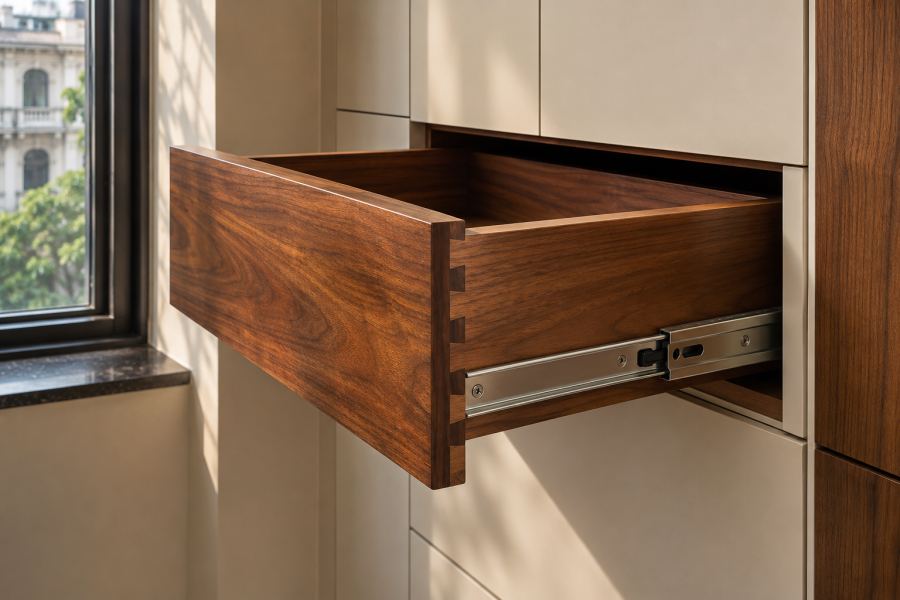
Arrange the handover while the fitter is available and the rooms are clear enough to open every door. Take the last approved drawing, the finish samples and a phone for photographs. Work through one room at a time so an issue in the bedroom does not get lost in a conversation about the kitchen.
Start with how the unit works
Open each shutter through its intended travel. Pull each drawer out, check that it clears nearby handles or walls, and close it again. Try adjacent units together, especially at a kitchen corner. Ask the fitter to demonstrate any unusual mechanism and show you which shelves can move. Use ordinary movement and leave adjustments to the installer.
Compare the delivered details
Count the drawers, shelves, rails and accessories against the approved elevation. Read accessible hardware markings against the agreed specification. Look at the visible edges and junctions in normal daylight as well as the room’s installed lighting. For a mismatch, photograph the whole unit and then the detail so the fitter can identify its exact position.
Make one shared snag list
Give each item a room, unit and plain description. ‘Bedroom two, left drawer catches the right shutter’ is easier to act on than ‘wardrobe finish pending’. Agree who will return and when you can check the repair. Keep completed items on the list with a date, especially if several trades visit the site on different days.
Keep the information you will need later
Collect the final invoice, hardware references, finish codes, care instructions and written warranty details where supplied. Ask which cleaning products the finish manufacturer recommends. Save the final drawings and a few wide photographs beside those records. A year later, the code for one damaged shutter or a replacement runner may be more useful than a folder full of design renders.